

UAE travel: Here’s when Etihad Rail will finally welcome passengers onboard
High-speed train set to connect seven emirates, Oman, and beyond

DUBAI: Etihad Rail’s long-awaited passenger service is finally on track to launch in 2026, marking a significant milestone in one of the UAE’s largest infrastructure projects to date.
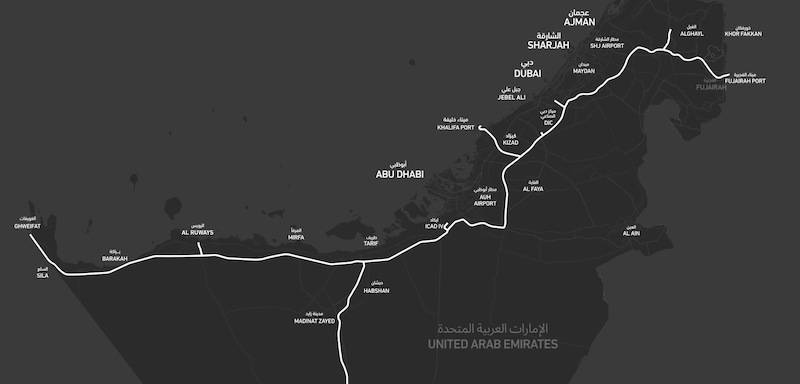
Stretching across 1,200km, the railway aims to connect all seven emirates and 11 major regions, ultimately transforming how people travel across the country and beyond.
While freight operations have been running since 2016, this will be the first time passengers will get the chance to ride this modern marvel of engineering.
A high-level meeting held last week between Sheikh Hamdan bin Zayed Al Nahyan, Ruler’s Representative in Al Dhafra Region, and Etihad Rail executives, including CEO Shadi Malak, confirmed the 2026 launch date. The announcement, shared via the company’s official social media accounts and later validated by its media representatives, has ignited nationwide excitement.
Etihad Rail: Where will it go?
The initial passenger stations will include Abu Dhabi, Dubai, Sharjah, and Fujairah. Sharjah’s station will be located near University City and the airport, while Fujairah’s is being developed in Sakamkam. Though the precise station sites in Abu Dhabi and Dubai have not yet been disclosed, reports indicate Dubai’s hub will be near Jumeirah Golf Estates. This location was hinted at by Wasl, one of Dubai’s major real estate developers, during the announcement of a new residential phase at the same site.
Each station will integrate with existing public transport, ensuring seamless connections for daily commuters and intercity travellers. The railway will significantly reduce travel time:
- Abu Dhabi to Dubai: approximately 57 minutes
- Abu Dhabi to Fujairah: around 105 minutes
- Dubai to Fujairah: close to 50 minutes
- Abu Dhabi to Ruwais: about 70 minutes
Etihad Rail’s passenger trains are designed to carry up to 400 passengers at speeds reaching 200kph.
What's still unconfirmed?
Despite the confirmed launch timeline, several aspects of the rollout remain under wraps. While the passenger service is on track for 2026, the entire network will not be fully operational by then. Completion of the full system is expected by 2030, according to project officials.
Also in development is a separate electrified high-speed service between Abu Dhabi and Dubai. Construction for this line has not yet begun, and integration with the standard Etihad Rail route remains to be clarified.
Meanwhile, freight services continue to operate efficiently. Since 2016, two main tracks covering 264km have transported granulated sulphur from Shah and Habshan to Ruwais. Each train, running daily, is capable of carrying 22,000 tonnes in up to 110 wagons.
Beyond UAE borders
The Etihad Rail vision extends well past the country's own borders. In February 2023, a deal was signed between Etihad Rail, Oman Rail, and Mubadala to construct a 303km line linking Sohar (Oman) with Abu Dhabi. Travel time on this cross-border route is expected to be just 100 minutes.
Further plans were discussed during the recent May meeting regarding expansion across the GCC. These include proposed connections with Saudi Arabia and Qatar, as well as a 360km rail network in partnership with Jordan. These projects indicate that Etihad Rail could soon become the backbone of a much larger regional railway network, creating new possibilities for both travel and trade.
The national railway network, which began construction in 2009, is already reshaping logistics in the UAE. Once completed, Etihad Rail will stretch from Fujairah Port to Ghuwaifat on the Saudi border, passing through key ports like Khalifa and Jebel Ali.